2011 Simulated Emergency Test

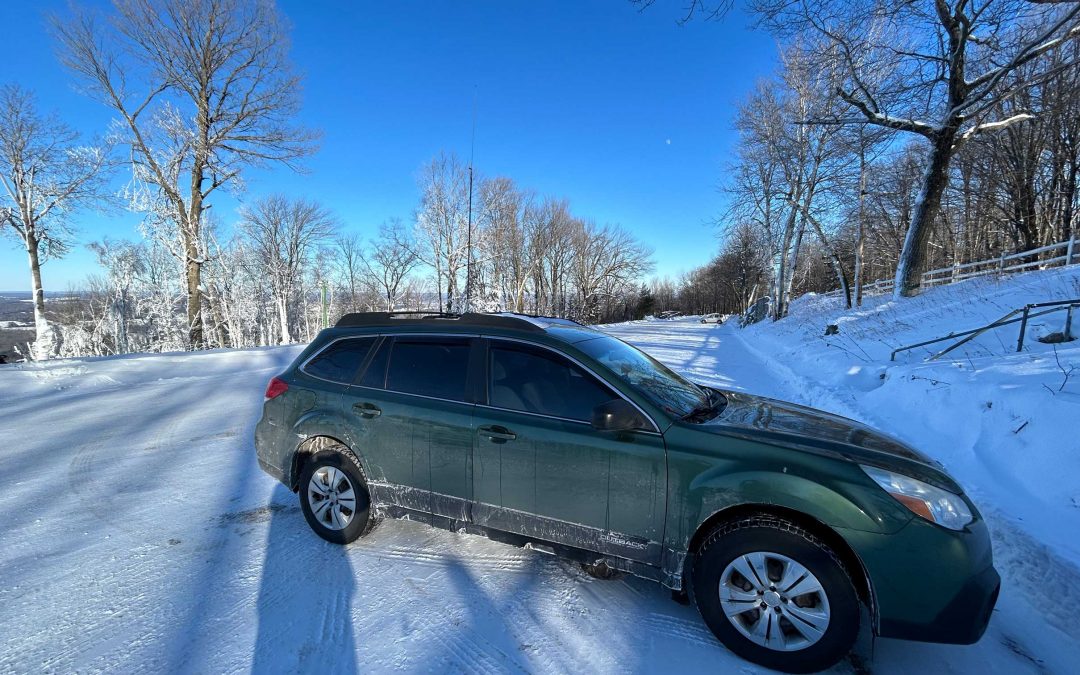
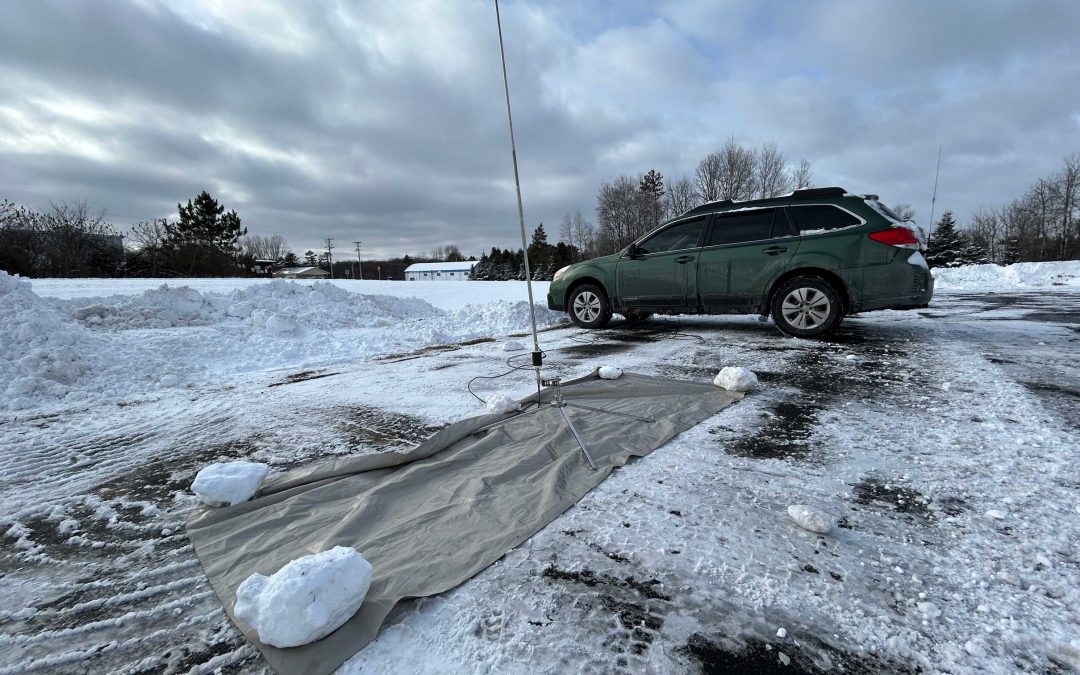
2011 ARRL Simulated Emergency Test SETOctober 1, 2011 marks the date for the 2011 ARRL Simulated Emergency Test (SET). The SET is a readiness exercise to test the capabilities of ARES/RACES emergency communications groups. Unlike Field Day which is more points based and social, the SET drill is usually based around a scenario. This year our local ARES/RACES group chose to test our capabilities by assembling a HF, VHF/UHF station in the parking lot of one of our served agencies, the Marathon County Red Cross.

Our ARES group designed our SET scenario to test a few different capabilities: Use ICS forms to plan the operation, assemble the station in a wild location, be a regional resource for the state’s ARES/RACES communication network. Despite a few hiccups, we achieved our objectives that we outlined in the plan. The ICS forms worked well for our purposes and all future ARES activities will include filling out an ICS-202 prior to starting the activity. If your ARES team is ICS-100 and IS-700 trained, there is no reason why you shouldn’t utilize these resources.

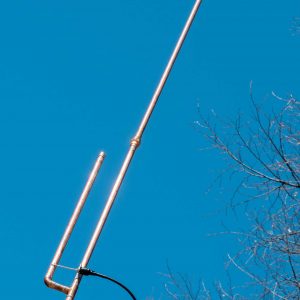
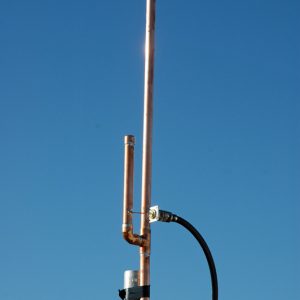
Simulated Emergency Test ARRL UHF J-Pole antennaAs a side note, we used a KB9VBR 440 MHz UHF J-Pole to connect to a wide are net and a KB9VBR 2 meter J-Pole to run our Winlink station. HF antenna was a home brew 120 foot dipole with open wire feed.

Posted in 2 meter, UHF | Tagged , , , , , , | Leave a comment

Monitoring Aviation Band Communications

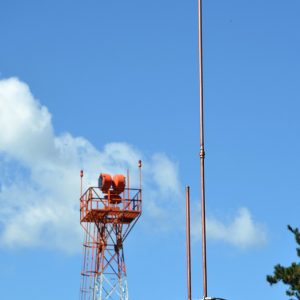
KB9VBR aviation band airband j-pole antennaA big segment of the scanner community is centered around listening to aircraft communications that happen on the ground and in the air. Living near a major airport, these transmissions can be quite numerous; but even in less populated area you can hear a plethora of signals. Air to ground signals can carry several hundred miles as you listen to planes flying in uncontrolled space. If you are near an airport, FBO, runway, or airstrip, the ground communications can be just as interesting.

My airband J-Pole antennas work great at picking up aviation signals. Most airband listeners tend to gravitate towards discone antennas. While discones work great for scanning because of their broad band nature, they aren’t necessarily the best choice for the aviation band. The Aviation band J-Pole antenna has two distinct advantages over discone and quarter wave antennas.

First the antenna is a half wave by design, so it has more gain than a discone, up to 3db more in most cases. Discones have a spherical radiation pattern, so they pick up signals from all directions equally. The J-Pole’s pattern is more doughnut shape; that is it slightly favors the horizon as compared to the sky. The doughnut shaped pattern works better for aviation as it will give you the advantage of receiving the FBO and ground operations. VHF signals are line of sight, so you’ll have no problem picking up in-flight signals regardless of the antenna style.

The airband J-Pole antennas are custom tuned for the aviation band, so they work equally well for receiving and transmitting a signal. They are usually set to Unicom, but can be tuned to any frequency of your choice at time of order.

Get an airband J-Pole antenna and let your aviation listening soar to new heights.


Posted in Antennas, Aviation, News | Tagged , , , , , , , | Leave a comment

J-Pole Scanner Antennas

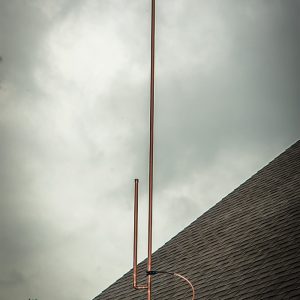
KB9VBR VHF scanner antennasThe other day I was listening to the scanner and I heard a page out for the fire department. The address was about a block away from our house, so I popped outside and was surprised to see the box factory near our house was on fire. As the fire trucks got closer, a crowd from the neighborhood gathered and we watched the firefighters tackle the situation. Fortunately the damage was minimal, lightning had struck the building earlier in the evening and the roof started to smolder near where the electrical entered the building.

Scanner listening is a great pastime and a high quality VHF/UHF scanner antenna can not only increase your range, but also help pick up the weak signals that a regular scanner antenna wouldn’t be able to pick up. Many times when the fire department has an incident, they’ll switch to tactical frequencies to keep the paging channel clear. If you don’t have an external antenna like the KB9VBR J-Pole scanner antenna, you’ll miss out on a big part of the traffic.

Keep listening to the airwaves, you’ll never know what you may pick up.


Posted in News | Tagged , , , | Leave a comment

How many watts can a J-Pole antenna handle

A frequent question that is asked about my antennas is how much power can they handle. This is a common concern as there are many different styles and construction methods of J-Pole antennas. Depending on what materials are used to build your antenna, its power rating could be vastly different.

The KB9VBR 2 meter J-Pole antenna is constructed out of 1/2 inch Type M copper tubing. Copper is a highly efficient conductor and radiator. The thicker copper tubing, as opposed to copper wire, can also handle a large amount of heat energy. I’ve tested the antenna with transmitter and amplifier feeding it up to 250 watts of power. But there is no reason it could go higher, over 500 watts or more with an antenna carefully tuned to a resonant frequency.

J-Pole antennas built out of wire like 300 Ohm tv twinlead or 450 Ohm ladder line are more limited in their power handling capabilities. I wouldn’t want to put more than 10-20 watts into a twinlead J-Pole for fear that the resistance in the wire will cause it to burn up. 450 Ohm ladder line is made of thicker wire and could handle 50 watts with careful construction methods. Twinlead and ladder line are designed to be a transmission line and not for rf radiation. The wire resistance is low when they are carrying a signal, but once they are put in a situation of radiating a signal, resistance increased. With increased resistance comes heat and the possibility of the insulation, or worse, the wire itself burning up.

If you are looking for an antenna for a VHF base station radio, consider the antenna’s power handling capability and know that you can trust the KB9VBR 2 meter J-Pole antenna to deliver when connected to your high power rig.


Posted in Amateur Radio, Antennas, News | Tagged , , , , , , | Leave a comment

Win a 2 meter J-Pole antenna!

KB9VBR 2 meter J-Pole antenna GiveawayNow’s your chance to win a FREE 2 meter J-Pole antenna. Head on over to Hamuniverse.com and register in their drawing for a 2 meter antenna supplied by KB9VBR J-Pole antennas. The drawing is open to all amateur radio operators residing in the USA. Good Luck!

While you are at it, be sure to browse www.hamuniverse.com site. It’s loaded with tons of information, antenna plans, tips and projects for the new and experienced ham alike. Best of all, its all free.

Hamuniverse dot com

Posted in News | Tagged , , , , , , | Leave a comment

J-Pole Antenna Brochure Updated

kb9vbr j-pole antenna information

My J-Pole antenna brochure has been completely revised and updated. This is the same brochure that is included with every antenna that I ship. In it will you find information about mounting the antenna, tips, and a short history of the J-Pole. You can download the brochure here, or just order an antenna and have one shipped to you :) .

Posted in Antennas, News | Tagged , , , | Leave a comment