
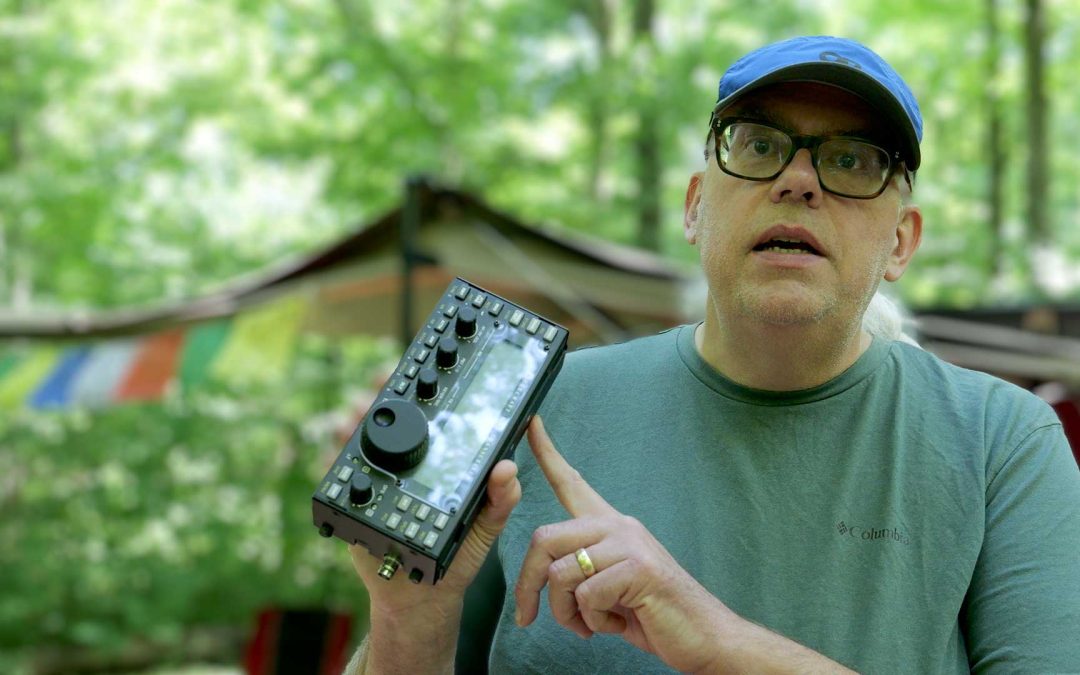
As amateur radio operators we put a lot of time and effort in order to make our signal go further. We pick antennas with a low RF radiation takeoff angle, we search for efficiency in design, and we spend vast amounts of time and effort analyzing the propagation charts for that rare DX opening. But what about communicating with stations closer to home? There’s a method to that, and it’s called NVIS.
NVIS or Near Vertical Incidence Skywave Propagation isn’t about distance, but how to communicate on a local and regional level. And communicating at a local level is the topic of this week’s video, The Art of NVIS: The BEST Way to Talk Locally: https://youtu.be/ihTNyAre7Xc
A Practical NVIS Antenna for Emergency or Temporary Communications: https://www.dxengineering.com/techarticles/miscinfo/learn-how-to-build-a-nvis-antenna
Understanding NVIS (via Rhode and Schwarz) https://cdn.rohde-schwarz.com/pws/campaigns/rsa/Rohde-Schwarz_Understanding-NVIS_v1.1.pdf
Elecraft KX3 Battery: https://amzn.to/4h4tDhj
BNC to SO-239 Jumper: https://amzn.to/4ch2vco
Small Camera Bag (fits Elecraft KX3): https://amzn.to/4xD3Hzs
Purchase ELMER Brand Chokes and Save 10% Use link and discount code KB9VBR10 at checkout: https://elmerbrand.com/KB9VBR10
Why not use VHF and a Repeater
I’m sure I’ll get this question in the comments, but why not use VHF and a repeater if you wish to make local contacts. Repeaters are great, and a perfect choice when infrastructure is intact and terrain isn’t a factor on their utility. If there is a severe weather net, marathon or long distance bike ride, or community focused event, the repeater and handheld radio is great solution. But there are limitations.
With repeater contacts, I am expecting a range of 0 to 50 miles, extended maybe a bit further if the repeater has remote receive or linked capabilities. HF and NVIS extends this range from 50 up to 300 miles. That extended distance is excellent for NTS traffic handling, HF email through VARA or Winlink, and connecting an entire state or region to a single net and operator.
HF and NVIS is also a disconnected communications method. There is no need for infrastructure like links and repeaters. If you can set up a station, you can be part of the net. I’ve participated in HF nets well out of range of repeaters, and I’ve worked other regional stations that I would never be able to talk to with VHF repeaters.
Repeaters have their place, and we need to use them to keep them as a viable resource for daily chat and emergency communication, but we also need to flex our HF muscle and understand how NVIS works when “all else fails.”
Finishing Up
This week’s video was made without using any generative AI technology. My sketches and charts were hand drawn and my script was 100% created by me. I used primary sources for my research, the excellent Rhode and Schwarz document linked above was invaluable. And my own personal experience as a ham radio operator that has used NVIS techniques was put to task. AI may have its place, but regurgitating a generative script along with contrived images is not it.
September came up fast. Summer in the northwoods is always too short, and with autumn around the corner, fall camping season is here. Our 4th annual ham radio campout is less than a month away, and I’ve got content plans that lean heavily on what I feel is the best season of the year.
Our monthly livestream also happens this Thursday, September 3rd, at 7:00pm central time (0000 UTC 4 September). Joe is back and we have a great show lined up. Please join us, link is here: https://youtube.com/live/yDa8levbpZQ
I hope to get you in the log soon,
Michael
KB9VBR

Recent Comments