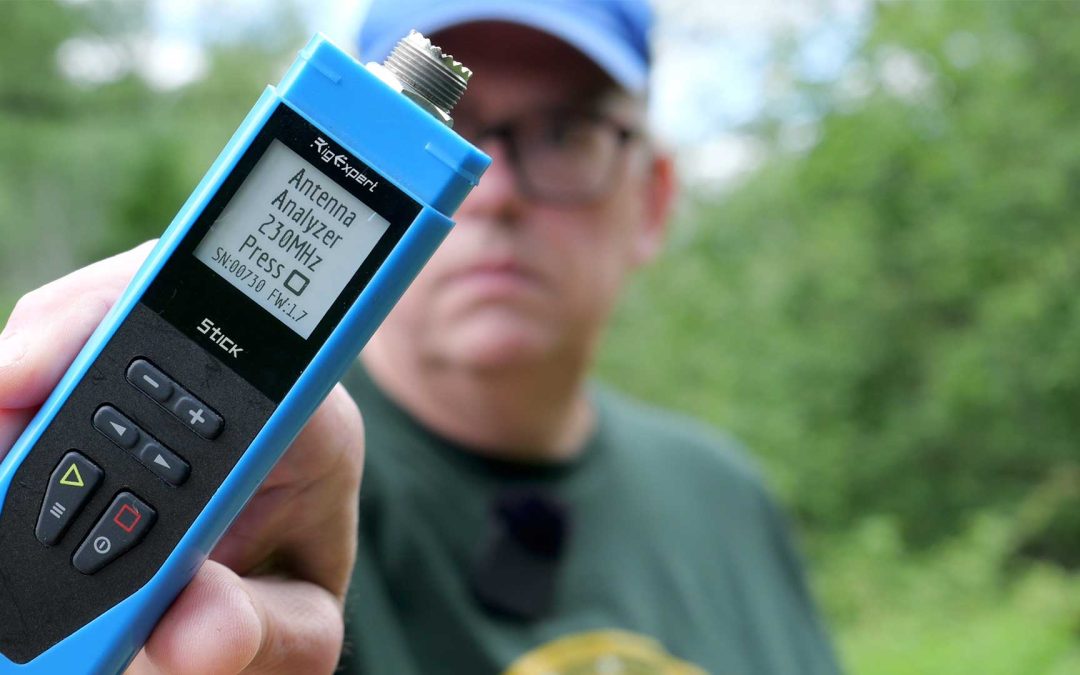
An antenna analyzer is a permanent part of my antenna kit. It’s a fast and easy way to help get your portable antenna adjusted for maximum performance. But you can easily get by without one, and in this week’s video I show you how to do that.
This technique isn’t just helpful when building an antenna, it will also help you in a pinch. There have been times when I forgot the analyzer at home and used these same method to adjust my antenna. It’s a good skill to know, and in this week’s video I show you how to adjust and tune antenna using just the SWR meter on your transceiver: https://youtu.be/iv32l1FdI0o
In this video I mentioned why we use the formula of 468/Frequency=Length for a half wave dipole. You can more about that formula in last week’s newsletter: https://www.patreon.com/kb9vbrantennas/posts/build-working-in-161339377
Build the Bushcraft 40 meter Dipole Antenna: https://youtu.be/Quja5S1O-IA
Parts list
BNC Female to Dual Banana Female Socket Binding Post: https://amzn.to/3SJhxAq
BNTECHGO 22 Gauge Silicone Wire Spool 250 ft: https://amzn.to/4uJmqqt
Stainless Steel Split Ring for Keychains: https://amzn.to/4oxkwYx
Victorinox Swiss Army Spartan Pocket Knife: https://amzn.to/4uGmTtF
CRAFTSMAN 100-ft Tape Measure: https://amzn.to/43OdzsT
Rigexpert Stick 230 Analyzer: https://dxengineering.pxf.io/rEQxKD
ARRL Field Day 2026
ARRL Field Day is the world’s largest amateur radio on-air event. Literally 10s of thousands of hams get on the air over the weekend, and many more just drop in to the field day sites to socialize and have a good time. I’ve done dozens of Field Day videos over the years, and if you need a pre-game for the event, check out my playlist: https://www.youtube.com/playlist?list=PLtTjGEOMh1fSzSTAU8VzjdmDerCSSwVgL
I’ve done more than my share of Field Days; 26 and counting. So I’ve picked up a thing or two that help make the event a success. Whether you are doing a small group with a couple of hams, or are park of a big club operation, here are five things that will help make Field Day a success.
Cut the Interference
One of the biggest challenges we often face at Field Day is how to reduce station interference. Invariably the CW and digital stations will bleed over to the phone station, and the 20 meter guy is blowing out the upper bands. Over years of operating portable, I’ve found a few things that really help clean up the noise.
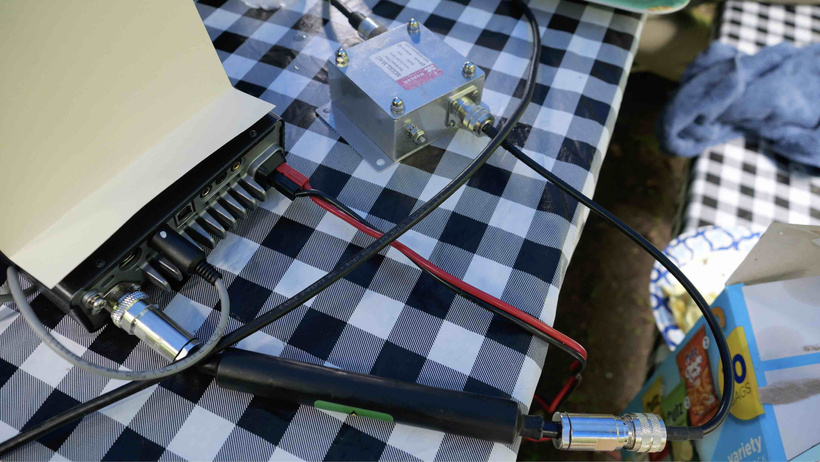
First, use common mode chokes. Not just at the feed point, but add a second choke at the transmitter. You may not realize this, but the braid of your coax can act as an antenna, and it will pick up noise from other stations. Adding the second choke will drop that noise significantly.
Second, use band pass filters. Band pass filters do a great job at reducing the out of band noise, making it easier to run multiple bands in a confined space. They are perfect, but if you combine a band pass filter with a common mode choke, your interference reduction will get exponentially better.
Third, think about antennas and placement. Antenna placement matters and picking antennas that are polarized differently can reduce out of band interference. If one station is using a horizontally polarized antenna, put a vertically polarized antenna on the second. If you are using wire dipoles, think about their nulls and orient them so each antenna is in the null of the other. Your ears will thank me.
Test drive your logging system
I don’t care how confident you are about your computer networking ability and logging software, but do a dry run of everything before the event starts. Of all my years of late starts for field day, almost everyone was due to the computers not talking to each other. Before the event starts, check out everyone’s computer: make sure they are all on the latest version of the software and have all the OS updates. Make sure they can connect to the network. Do a couple of test contacts so everyone sees every other station.
For the last couple of years we’ve settled on N1MM+ as our field day logging software. The program has a bit of a learning curve, but we’ve found the networking capabilities to be the easiest of any we’ve used, and it has local journaling and backup capabilities so if a station loses its connection, it can still resychronize when it connects.
Catch the Bulletin Early
Copying the Field Day bulletin is an easy 100 bonus points for your station. But once the event starts, it can be challenging to copy it as everyone is busy making contacts. Did you know that W1AW sends the bulleting out Friday evening starting at 0000 UTC on Saturday? Nothing in the rules explicitly state that you need to be on site to capture the bulletin, so this could be done at home prior to the event. Get it in the log before the event starts and don’t worry about it for the rest of the weekend.
Radio Cheat Sheets
When I was a new ham radio operator, the biggest frustration I had was sitting down in front of a transceiver and wondering what all the buttons do. Where’s the volume? What is RIT? How do I turn VOX off? Why does everything sound funny? There are scores of cheat sheets and nifty guides available online. A short bullet pointed list of key operator functions will not only help those unfamiliar with the transceiver get on the air, it can also be a teaching tool for new hams sitting down in front of the radio for the first time.
Bug Spray
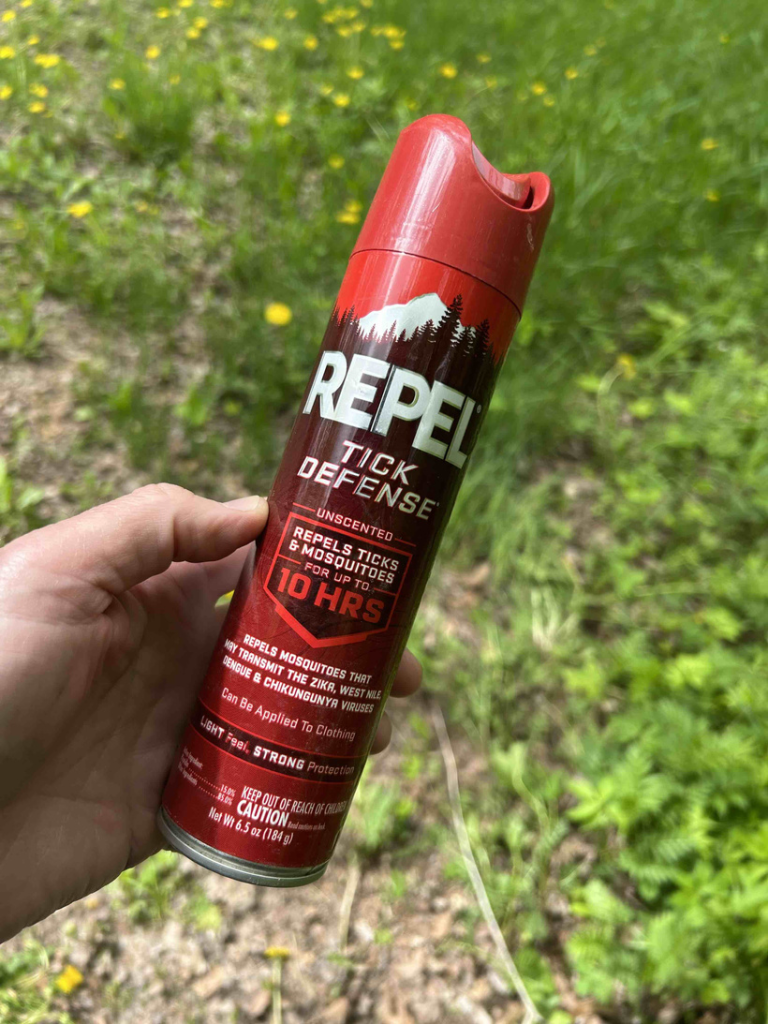
Invariably there will be insects during Field Day. I’m sure everyone has their favorite repellant. Mine is Repel brand in the red can. This stuff contains Picaridan, which is effective against ticks and mosquitos, and unlike DEET repellents, won’t melt plastic. I started using the stuff when I found out it was the preferred repellant by USFS employees. Walmart has the stuff, so pick up a couple of cans.
Thermacells are also an effective bug deterrent. They use heat from a butane flame to warm a repellent soaked pad. This creates about a 15 foot relatively bug free radius. The wind has to be relatively calm, but I’ve found the units to be highly effective in buggy places.
Finally, don’t forget to hydrate, have plenty of snacks available, and most of all, have fun.
Finishing Up
I will be out again with Travis, Joe, and Dave in the Chequamegon-Nicolet National Forest this year for Field Day. We’ll be using club call, N9CNF. I’ll be concentrating on 20 and 40 meter phone operation, but may do a bit of digital, we’ll see how the bands and operator staffing goes. The weather looks decent, so it should be a fun weekend.
I hope to catch you on the air
Michael
KB9VBR

Recent Comments