
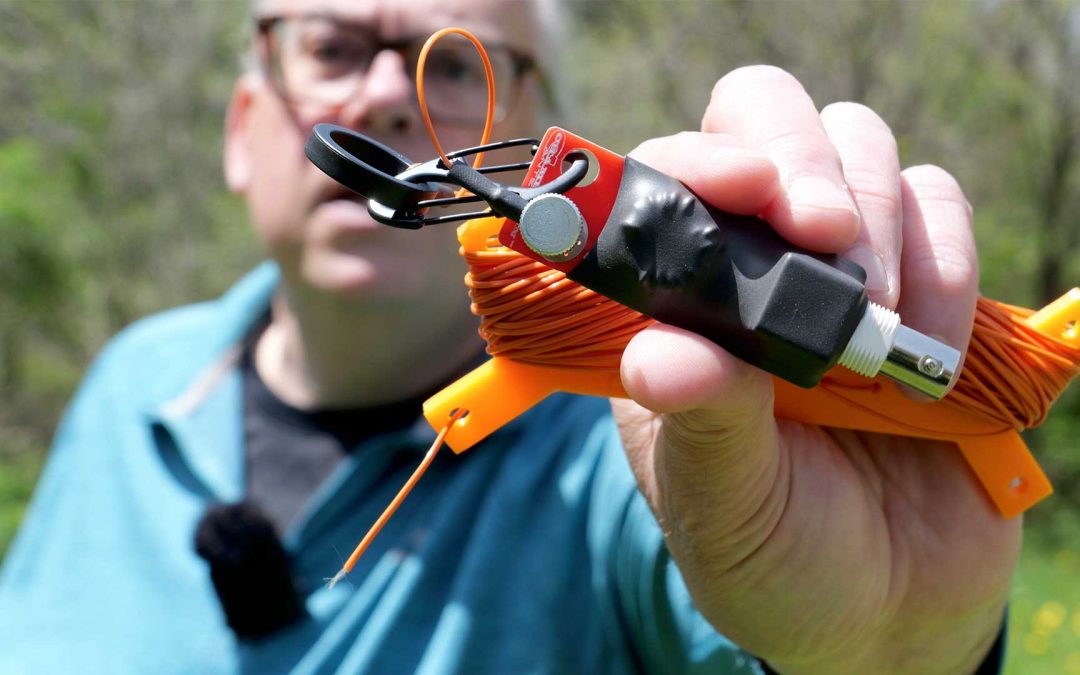
QRP, or low power, communication can be a lot of fun. QRP can also be a challenge. Making contacts with the minimum amount of power, or even less than that, hones your skills as an operator. When your output power is measured in single watts, you really start to think about your antenna system and the effects of propagation. And that’s where the magic of ham radio happens.
This week’s video I dive headfirst into QRP with my new to me transceiver, an Elecraft KX3 that I picked up at Hamvention, and the LEFS Feather 40 meter end fed sloper antenna that Chameleon recently sent me. I’ll talk more about the Elecraft in a bit, but the Feather antenna is well suited to the task and it’s light weight and small form factor make it an easy addition to your portable kit.
You can see more about the Feather antenna in this week’s video: Chameleon LEFS Feather Antenna QRP Real World Test. Watch here: https://youtu.be/L4QJKHQ0ry0
Chameleon LEFS Feather End Fed Antenna: https://chameleonantenna.com/ksfywy
Chameleon CHA CFM 34 Foot Carbon Fiber Mast: https://chameleonantenna.com/93ygqy
RigExpert Stick 230 Antenna Analyzer: https://dxengineering.pxf.io/rEQxKD
Elecraft KX3 First Impressions
I’ve had my Elecraft KX3 for a few weeks now and have had it on the air a couple of times. This isn’t a comprehensive review of the transceiver, there are many of those online in you want a deep dive, but instead my initial feelings. My feelings may change as I gain experience with it, so let’s dive in.
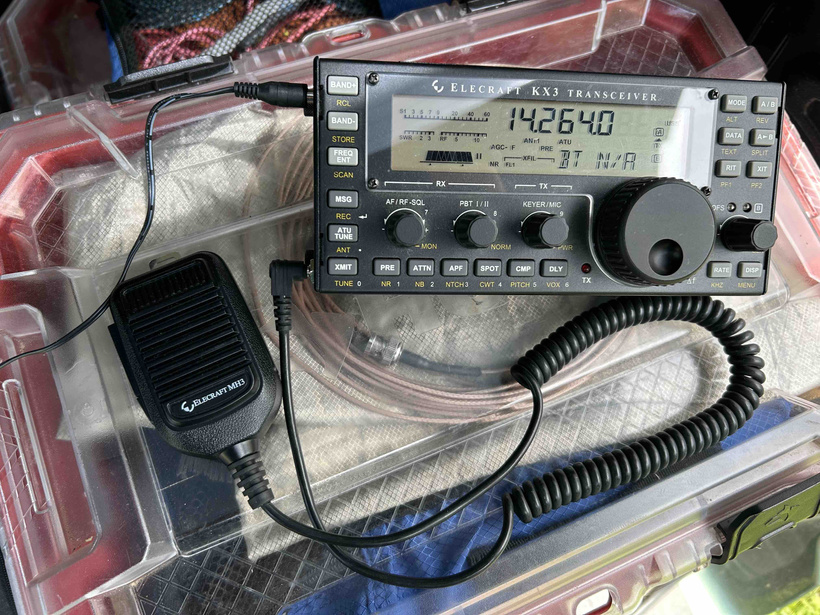
First off, the KX3 is almost 15 years old. The QRP was introduced in 2011 and is still actively produced. It was marketed as one of the first true SDR (software defined radio) transceivers and it shares a common architecture as its big brother, the K3. This radio was truly stood the test of time and it is still listed in the Sherwood Engineering receiver test data list at number 11. To hold a position that high for so long is totally amazing.
With that said, I couldn’t believe how quiet it was when I turned the rig on. This lack of noise isn’t because it was deaf, but quite the opposite. The filtering is so good that it was pulling out signals from a seemingly dead band like magic. I took the rig down to the shack and tested it against my Yaesu FTdx3000 on the same antenna. The KX3 held its own, maybe even a bit better. Yep the receiver is that good.
Which is great. Now I can pull signals out of the noise, but can I contact them with the 10 watts the rig delivers? The KX3 isn’t gonna break pile ups, but other stations also didn’t have trouble hearing me once we established a contact. The difference between 100 watts and 10 watts is 9dB or one and a half S units. When I am on the air I typically transmit at 50 watts to conserve battery life and that’s only a 6dB or one S unit difference. You really aren’t giving up as much as you believe by going low power and I feel QRP fits well into my operational style. I can’t wait to turn the power down even lower to see how well I do.

So far I’ve used this rig on phone, the hand mic is very good. it is an electret style element like the Icoms, but the cool thing is that you can turn of the mic bias and increase the mic gain on the KX3 to use a dynamic mic element like my Koss headset.
But the rig is really optimized for CW. It has a port for a custom Elecraft key that connects on the side of the rig for handheld CW operation. It has a built in keyer and all the CW functions you would expect from a hot rod transceiver. It can even decode CW if you so desire. I’m still working to reacquaint myself with CW, so hopefully I can soon get this marvelous rig on the air with that mode.
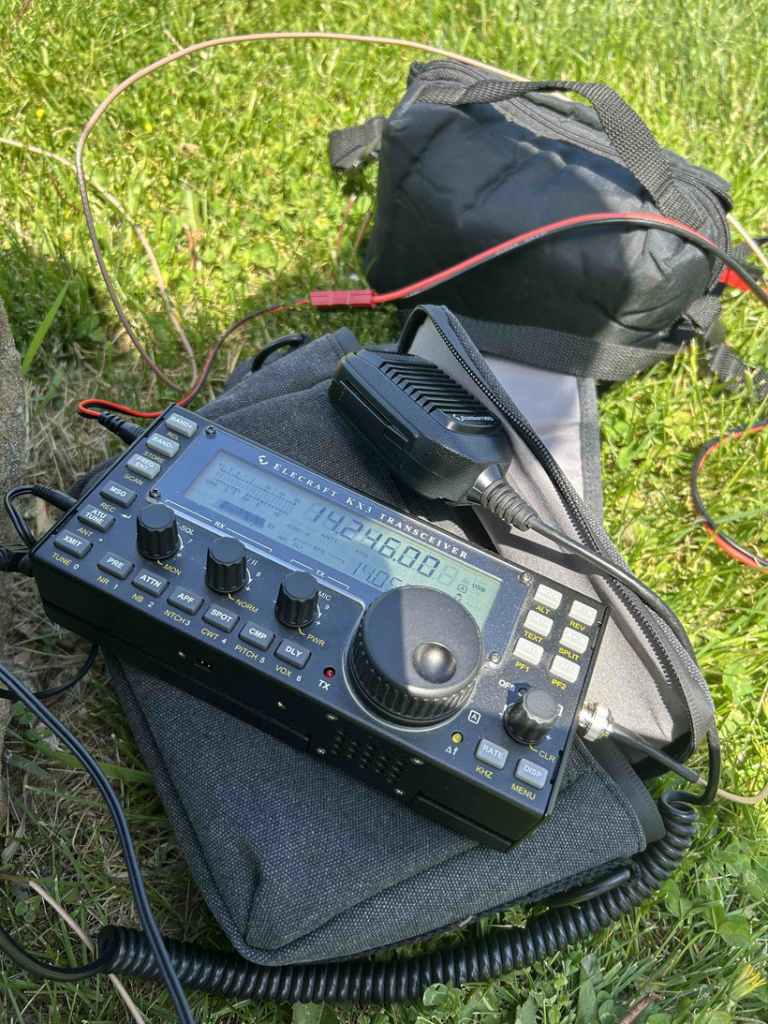
There are buttons for everything on the KX3 and many of the buttons do two or more functions. You really only need to go into the menu system for deep dive ‘set it and forget it’ functions. Another hallmark of the KX3 being an Operators Rig.
So what’s the bad? I’ve discovered a couple of quirks. First off is the AF gain or volume control. I wish it had a bit more volume. The internal speaker is terrible, which compounds the issue. The audio when using headphones is amazing, and I can see why some users attach an external speaker to the headphone jack to bypass the internal speaker.
The tuning dial is silky smooth, but the three other knobs, for AF/RF gain, Passband Filtering, and Keyer/Mic feel a bit off. They’ve got a bit of a wiggle to them, maybe because they have a dual function of a switch along with being a knob. I just wish they were slightly more confident feeling.
Finally, the display is protected by a piece of plexiglass. My particular rig was very clean despite it being a low serial number. I don’t think the previous owner had it outdoors at all. But I can see it getting scratched with normal use. I will have to find a way to better protect it and the other knobs and buttons.
But the honeymoon continues. I’m still loving my KX3 and look forward to getting it on the air again. My poor FT-891 is gonna feel jealous and lonely.
The Elephant in the Room
I know some will comment on this, but the Elecraft KX3 is not a cheap transceiver. A new fully loaded model like mine will cost up to $3000. Fortunately I found a used one for about a third that price. I don’t believe in going in debt for ham radio and i’ve been saving for about three years to catch the pinnacle of QRP operation when I came across one. Unlike other Youtube channels, I’m not constantly acquiring radios nor having flirtatious affairs with the latest and greatest. When I make a purchase, it’s often after very careful and deliberate consideration.
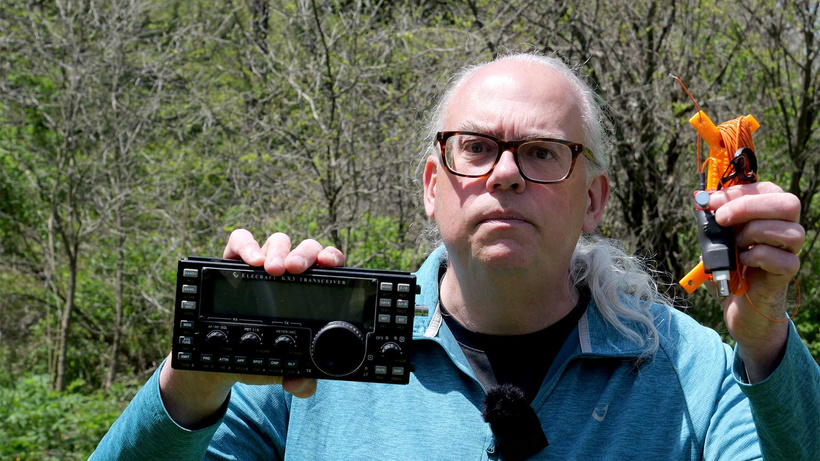
Is the KX3 the right choice for you? That depends on your goals and budget. Me using the KX3 shouldn’t necessarily be an endorsement. There are less expensive QRP rigs on the market and you can certainly gain enjoyment from a Xiegu 6200 or even a G90. I bought a Yaesu FT-817 a few years ago to fill the QRP gap until I found the perfect KX3. I’ve had loads of fun with that little rig and will probably take it to places I don’t want to subject the KX3 to, like the beach.
Finishing Up
Talking about gear, I’ve got some Meshtastic items that recently came in. Meshtastic is a UHF long range communication mode, much like APRS, for sharing short messages and tracking information. Meshtastic runs on the unlicensed 900 MHz ISM band, but amateur operators can also run it in a higher powered, licensed mode. So it’s a great gateway to introduce new people to the hobby. But it’s also a bit polarizing as some hams have a hard time understanding the value of the mode. That’s perfectly ok. I’m a long time APRS user, it was one of the attractors to ham radio when I got licensed way back in the day, so I enjoy exploring Meshtastic’s benefits. Hopefully in the video I’ll be producing in the next few weeks I can bridge the gap between unlicensed Meshtastic operation and it’s benefits to ham radio.
Feel free to leave me a comment if there is something specific you’d like addressed in the upcoming Meshtastic videos.
I hope to get you in the log soon.
Michael
KB9VBR

Recent Comments