

I’ve somewhat become a fan of vertical delta loop antennas. Small delta loops consistently punch above their weight, offering low noise on receive while exhibiting an excellent RF takeoff angle on the upper bands. But they are not for everyone. A delta loop’s setup is more involved and with the smaller loops, their low band performance is quite lackluster.
REZ Antennas raises the bar on small delta loops with the introduction of their XForm 4:1 transformer. Part of the Scout XF modular antenna system, this transformer adds a variety of nonresonant antenna options to the already versatile system.
That’s the topic of this week’s video: GENIUS! Rez Antenna System Scout XForm Transformer on the air https://youtu.be/NF_sfXS761M
BOSCH BT160 63 in. Aluminum Contractors’ Tripod: https://amzn.to/3Pd6U7b
Rez Antennas XFORM Transformer: https://www.rezantenna.com/xform
Purchase Rez Antenna System Products at DX Engineering: https://dxengineering.pxf.io/xJ9AVR
Delta Loop Antennas
Delta Loops are a variation of the loop antenna, where they predominately have three sides of approximately 1/3 wavelength each. Delta loops antennas can be deployed horizontally, which is common if they are constructed for the lower bands; or vertically if they are cut for the upper bands. Delta loops are multiband antennas, they will work best on the band for which their fundamental frequency is calculated, but with a tuner will operate on higher bands quite well.
For this article I am going to concentrate on the smaller, vertical delta loop antenna.
There are two things to consider with the vertical delta loop as they will affect feed point impedance and RF energy polarization: if the point of the loop is at the top or bottom and if the antenna is fed in the corner or the center of the element.
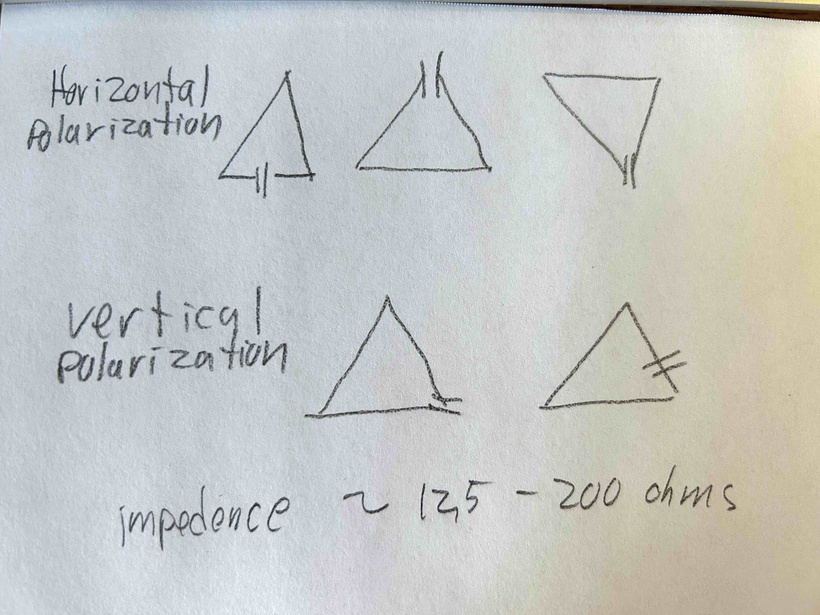
Generally delta loops are horizontally polarized if they are fed at the apex and the apex is pointed downward or upwards. They are vertically polarized if they are corner fed or fed along a vertical member of the loop. I like the flexible polarization options of the delta loop antenna offers.
With horizontal polarization, we can lower the RF takeoff angle by lengthening the horizontal member of the loop. So a corner loop or an apex fed loop where the horizontal member of the antenna is significantly longer than the other two elements will have a lower angle of radiation and favor DX communication. If we want to favor regional or stateside communications, keeping all three elements of the loop the same length will exhibit a higher angle of radiation.
Last summer I built a 20 meter delta loop antenna for Field Day. My design considerations where two-fold: I needed to be horizontally polarized and low RF radiation angle was not desired. I believe, generally, what I put on the air was a success. The results of my efforts can be found in this video: https://youtu.be/-WqOFKUKQaM

Which leads me to the REZ Antenna’s XForm and their vertical delta loop antenna. Delta loops tend to have an impedence between 125 and 200 ohms, often landing at about 150 ohms, give or take. So the XForm 4:1 transformer is an excellent complement to the antenna. The 17 foot whips extended out make the horizontal portion of the loop about 25 feet in length, which offers a relatively low RF angle of radiation. And finally, the circumference of the loop calculates to a near resonant point close to the 17 meter band, so it will perform best on the bands 20 meters and up. Every time I use these small portable delta loops on the upper bands, I come away with great results.
So if you are looking for a good multi-band antenna and don’t want to mess around with readjusting the whips every time you want to make a band change, give the delta loop a shot. I think you may be pleasantly surprised.
Finishing Up
Thursday is livestream night. Joe and I will be on this Thursday March 5 at 7:00pm central time with another edition Ham Radio Live. Watch it here: https://youtube.com/live/T968ntlYNEQ?feature=share
The good news is that March is warming up. The better news is that I have a stack of product reviews that I am working on. The XForm is just the tip of the iceberg, so if you like to see what’s new in the world of ham radio, you will be in for a treat over the next few weeks.
If product reviews aren’t your cup of tea, let me know and I’ll try to weave some other subjects into the mix.
I hope to get you on the air soon.
Michael
KB9VBR

Recent Comments