
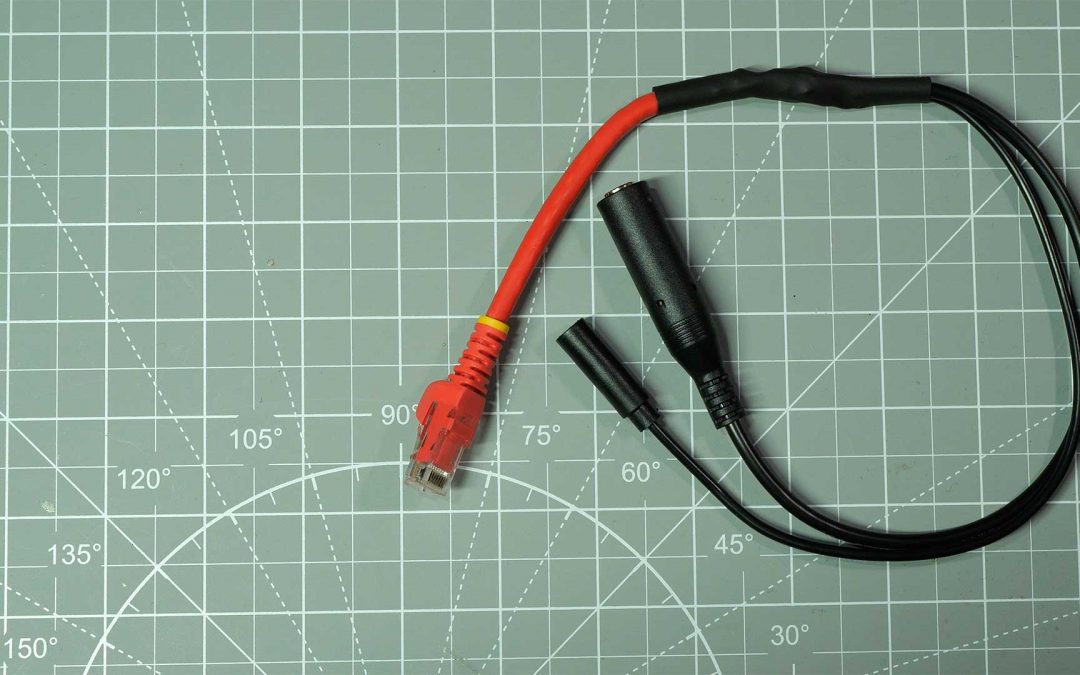
I’m all about saving money. What ham radio operator isn’t. I also enjoy the thrill of building something and implementing it into my amateur radio workflow. When I made the switch a couple of months ago to the Koss SB40 headset for my Yaesu FT-891, I was still using the Heil adapter for my BM-17 headset. The adapter worked just fine, but I knew that I also needed a spare adapter, so I could keep one with the Heil and another with the Koss. So I set out and built my own.
That’s the subject to this week’s video: This DIY Yaesu headset adapter hack saves you money You can watch it here: https://youtu.be/_j4E6mbrK8o
Koss SB40 Communications Headset: https://amzn.to/4aITokJ
1FT 1/4 inch, 6.35mm, Female Jack to Bare Wire Open End: https://amzn.to/4aARfpj
1 FT 3.5mm 1/8″ Female Jack to Bare Wire Pigtail: https://amzn.to/4cu0aLW
1ft CAT6 Ethernet Cable RJ45, 24 AWG: https://amzn.to/4tLp7sA
Yaesu Microphone Wiring Diagram
Pin RJ45 Color Plug Color
1 Down
2 Up
3 +5v
4 Mic ground Blue 1/8″ plug Black
5 Mic Blue/White 1/8″ plug red
6 PTT Green 1/4″ plug Red
7 GND Brown/White 1/4″ plug Black
8 FAST
Can I use this technique to build adapters for other transceivers? You certainly can. It will be easier for models that use a dynamic microphone element, like Yaesu, Kenwood, Flex, Elecraft, etc. Look up the microphone pinout in the user manual and follow these instructions for the 4 or 8 pin microphone connector that transceivers use.
If the transceiver uses a powered electret element, like Icom, you will need to add a blocking capacitor to the adapter if the headset has a dynamic element. If the headset is electret, then no capacitor is necessary. Since I currently don’t have any Icom equipment, I stuck with what I had.
Building things
I am always amazed at people who can think up electronic circuits in their head and then go about building whatever. My skill is no where’s near that level, and I’m gonna go off on a limb and say many other hams are in the same boat. This is from my experience in teaching amateur license classes and proctoring exams. It’s usually the electronic theory and basic circuits that trip people up.
This is something I want to add to my wheelhouse. I’ve got the tools: soldering iron, wire cuttters, multimeter, etc. I picked up books on the subject. I love watching videos were other hobbyists build things.
What’s holding me up? Maybe part of it is time. There are only so many hours in the day. It could be the abstract nature of electronics circuitry. Way back in school I took a few computer programming classes. I excelled at the high level languages, but the abstraction of assembler, and even C for that matter, held me back. Side note: I want to learn Python, but time again is not on my side. If anyone has a good resource for that, let me know.
Maybe I’ll start with some kit building and grow from there.
Finishing Up
Looking at my stats over the last few weeks, I’ve been kind of light on the POTA. The combination of a bitter cold January and a couple of ham radio contests have held me back from going out into a park and enjoying myself. Hopefully this can change soon. Snow is on its way for Thursday night and into Friday, but Saturday looks to be clear sailing. Let’s hope so, I’ve got some cool antennas that I need to check out and share with you.
I hope to get you in the log soon,
Michael
KB9VBR
Recent Comments