
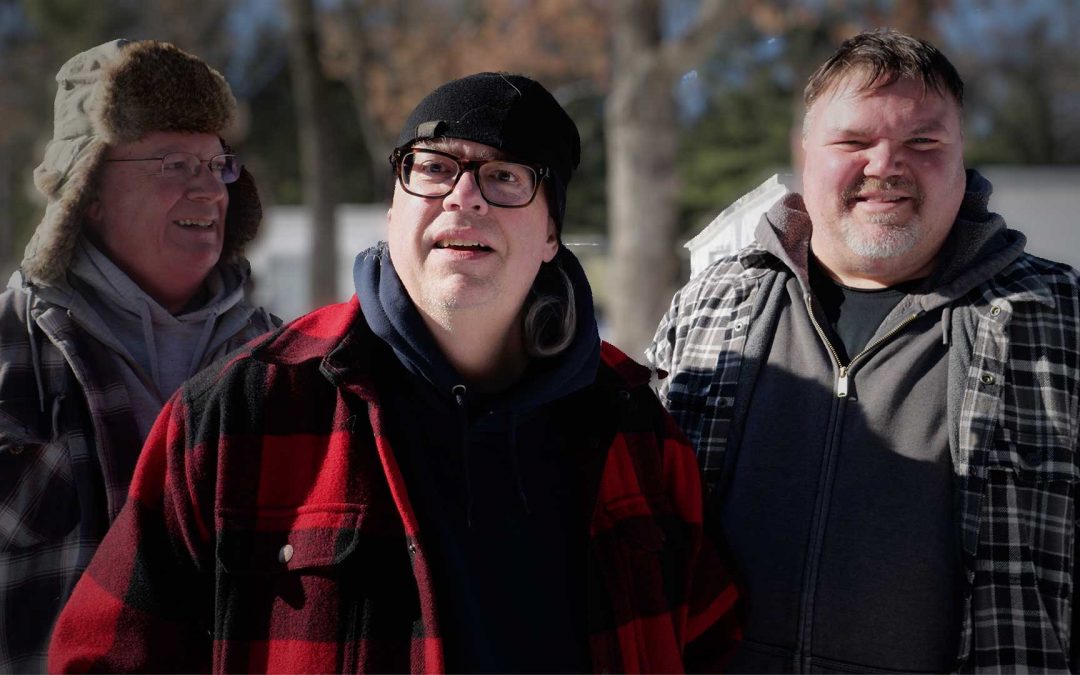
I’ve been doing Winter Field Day, give or take, for about 10 years. There’s been a couple years when I had other things going on and couldn’t participate, and one year the where there was so much snow that we couldn’t get into the cabin we were planning to operate from. Needless to say, every one has been unique and a bit of a learning experience. This year’s event is no different.
You can see the result of our effort in this week’s video. Winter Field Day 2026 Extreme Cold Challenge https://youtu.be/c64HwIEWrkM
Links and resources from the video:
Charming Cottage on Roche-a-Cri Lake: https://www.vrbo.com/en-nz/holiday-accommodation/p4077373vb
Chameleon CHA M25 Coil: https://chameleonantenna.com/ox9sp5
Chameleon CHA SS25 Telescoping Whip: https://chameleonantenna.com/2yyzp0
Chameleon CHA Tripod Adapter: https://chameleonantenna.com/qhdfd3
SADDLEBAG Design Weight Bags for Photo Video: https://amzn.to/46E3SPE
Rez Antenna Scout Antenna System: https://dxengineering.pxf.io/LKQy0j
Three things we learned this year at Winter Field Day
How cold is too cold?
Here in Wisconsin, especially the inner part of the state, cold weather is expected. While in recent years we’ve been lucky with highs in the mid to upper 20’s, this year mother nature let out the stops with some of the coldest weather ever. Air temps -25 and lower and wind chills approaching -40 degree Fahrenheit. Friday driving to the cabin, it didn’t get above -10 and Saturday morning we braved -20 while setting up antennas.
Things break when it gets cold: wire and coax becomes brittle and the exposure to the extremities is a real concern. We choose to operate from a heated cottage to minimize our risk and increase our comfort. Past years we’ve operated from an unheated cabin that took hours to warm up to a tolerable level, so comfort was key.
As for the antennas, prep your equipment indoors first, to limit time outside. Keep things warm and work in short durations. We choose simple to erect antennas, like verticals and end fed half waves to keep outside time to a minimum.
Plan for interference, and be ready to adjust
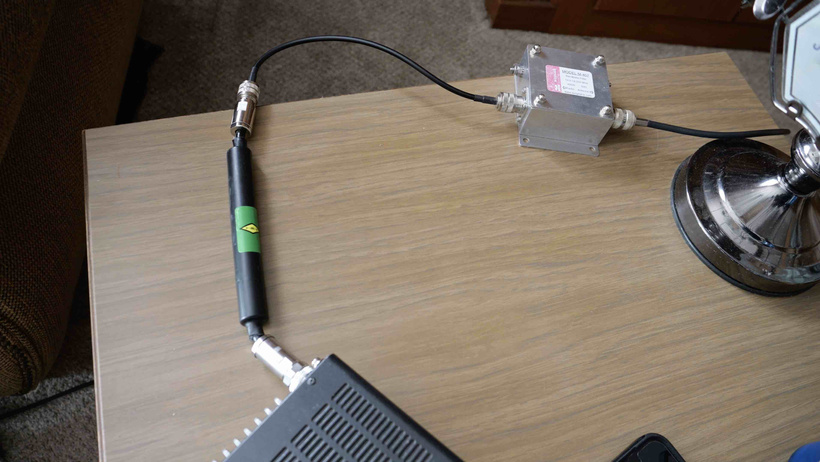
Our biggest challenge, wasn’t necessarily the cold, but it was keeping three stations on the air without stepping on each other. Dave and I have gotten pretty good at minimizing interference. Operating two stations is pretty easy, adding a third or more seems to quadruple the noise potential. But we used a combination of RF chokes on both ends of the coax and band pass filters to minimize common mode noise. For the more part is worked and kept all three of us on the air.
160 Meters Rocks!
For two years now, 160 meters has been the sleeper that came in strong. Last year Dave discovered an RTTY contest on that band and was able to rack in the points. This year a CW contest was happening on the top band. Both of these events gave a ready field of operators on a band that otherwise would be a challenge.
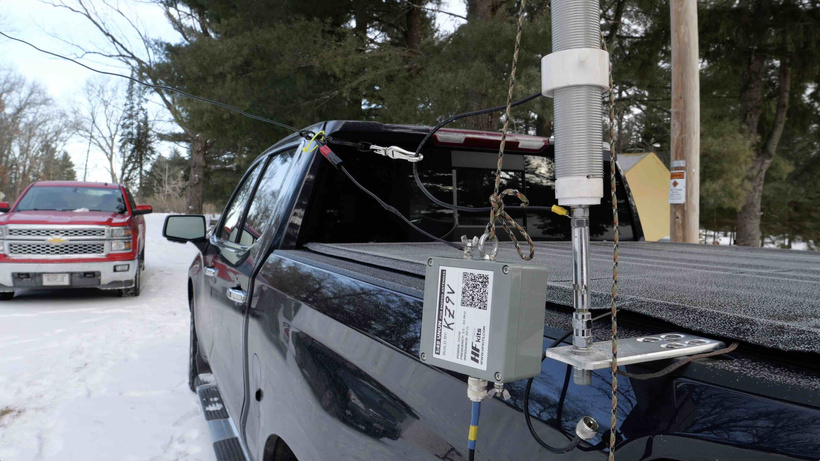
How’d he do it? 160 meter antennas tend to take up a bit of space, but Dave found that if he disconnected the wire from his end fed half wave and connected it to Wolf River Silver Bullet 1000 coil, he could get a good match as long as he used the body of his truck as a counterpoise. It’s a bit of a kludge, but smart thinking like this is what field events can inspire.
Bonus: Don’t forget the food!
Field Day runs on food. Well, that and coffee. We plenty of both this year. Friday was fish fry at a local establishment. Breakfasts included favorites like biscuits and gravy and breakfast burritos. And Saturday dinner was a delicious creamy chicken and rice soup. Our appetites were no match for this event. Bring lots of snacks and things that are relatively quick to prepare. You’ll want to spend more time on the air and less cooking and cleaning.
Field Day Biscuits and Gravy
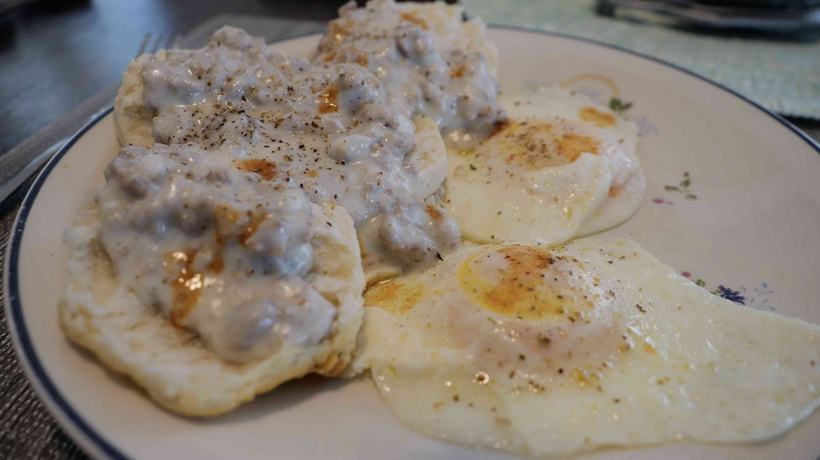
Making biscuits and gravy has been a field day tradition for more than a decade. In the summer months I make the biscuits in the dutch oven, so this is something that can be easily prepared home or away.
1 lb bulk pork breakfast sausage
2-3 tbsp butter
1/4 cup flour
2 cups milk
salt and pepper to taste
1. Break apart and fry the pork sausage in a large skillet until meat is cooked and fat rendered out.
2. Add butter. The amount will be dependent on how much fat the sausage has. Ideally you will want about 4 tbsp combined of sausage grease and butter.
3. Once butter is melted, stir in flour and cook for about 1-2 minutes. The fat should be well absorbed and the flour looking like thick paste.
4. Add milk, while stirring, and cook over medium heat until thickened. If the gravy looks too thick, you can add a bit of water to thin it.
5. Season with cracked pepper and salt to taste. Serve over fresh baked biscuits
Finishing Up
The cold weather continues here in Wisconsin. With at least 10 days of lows below zero, it appears we should warm up a bit on the weekend. Hopefully this warming trend continues through the first week of February as the Minnesota QSO Party is February 7.
I’ll fill you in on my plans for the QSO party next week. But as a teaser, make sure you add the callsign KØM into your Hamalert for next weekend.
I hope to catch you on the air
Michael
KB9VBR

Recent Comments