
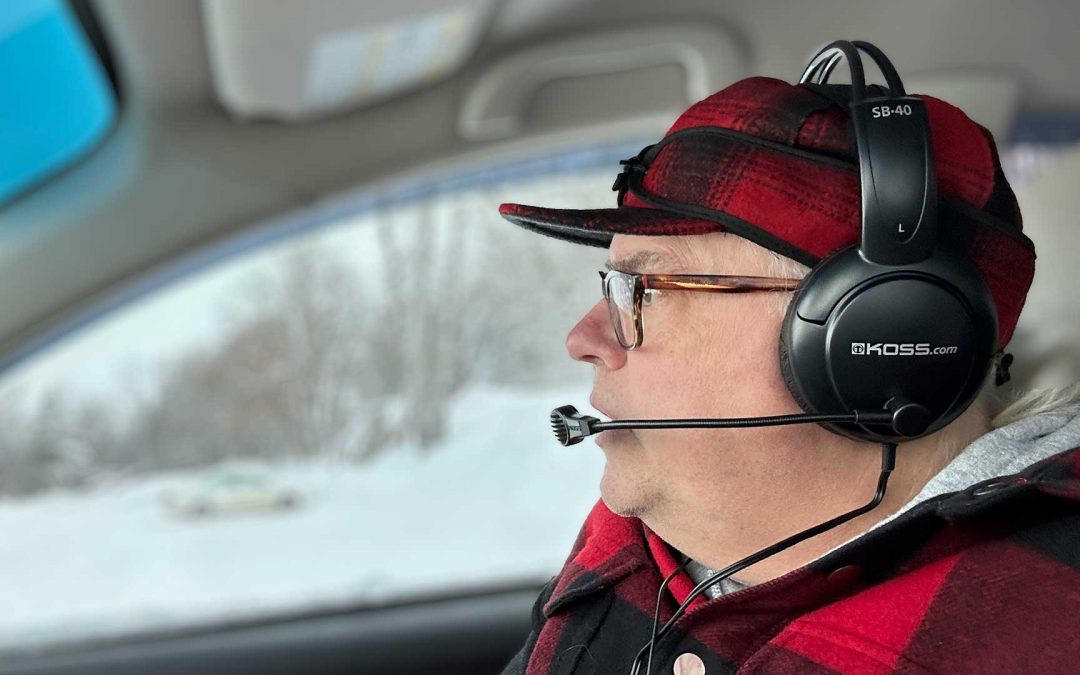
I’m a long time Heil Headset user. I love the fit of the BM-17 dual side headset and it has served me well for many, many years. But that model was discontinued last year and a replacement is not yet available. I’ve gotten countless requests on what is a good substitute for the BM-17, and after careful review and selection, I’ve come up with this: Koss SB40 Communications Headset.
In this week’s video I take a look at the Koss SB 40 communications headset, use it on the air, and determine if this is a good choice for portable ham radio operation. Watch I test the Koss SB40 Headset – Why I’m Using It for Every POTA Activation https://youtu.be/eN4AO21BvvU
Links/Resources
Koss SB40 Communications Headset: https://amzn.to/4aITokJ
Koss Electronics: https://koss.com/products/sb40
Heil AD-1-YM 8-pin modular adapter (Amazon): https://amzn.to/3N8b0N9
Heil AD-1-YM 8-pin modular adapter (DX Engineering): https://dxengineering.pxf.io/EELM1n
RJ45 Extension Cable 1 foot: https://amzn.to/3N8ZgtS
Build a hand switch for your headset: https://youtu.be/b5Wu8BlrSF0
What about Icom Users
Most amateur radio transceivers use a dynamic element for their microphone, so matching a microphone or headset to the radio is relative easy. As long as the impedance is somewhat similar (I’m looking at you Astatic Silver Eagles), it will operate with minimal fuss.
Icom, on the other hand, is different. They use an electret condenser microphone element. Electret microphones are great in that they are quite sensitive and can delivery beautiful audio. But they also require power to function. Plugging a dynamic mic into an Icom transceiver often results in a myriad of problems, most notably very poor audio.
Heil solved the Icom issue by building microphones and headsets with a specific Icom element. The electret elements in their I series microphones are great and an excellent solution.
Other Icom users have gone another route, using an adapter cable with an integrated capacitor to block the phantom power needed for the electret condenser element. One such solution can be found here: https://www.ebay.com/itm/157028823624
But when you use a dynamic mic on an Icom transceiver, you will most likely have to increase both your mic gain and compression to compensate. There’s no one value to set the mic gain to, you will have to experiment. Everyone’s voice is different and watching the ALC meter while making adjustments is the only way to get a good audio match.
In reading the feedback from this video, many Icom users have said the Koss SB45 headset works great with Icom transceivers. They say that model, which is slightly cheaper and smaller than the SB40, has an electret microphone. I haven’t tested this, but it may be an option, and the price is right, so go and give it a shot.
Another option, and one that will deliver better results is to use a preamp with your headset or dymanic microphone. Matt, K0LWC, has a video that tells you how to get superior audio with a dynamic microphone out of your Icom transceiver.
Since I am not an Icom user (I sold my IC-718 many years ago when I upgraded to a newer transceiver), I don’t have any specific recommendations on settings for using this headset with your Icom. You’ll have to experiment and do a little sleuthing. There is a wealth of information out there, so a quick google search will get you on the right track.
Finishing Up
Our January thaw came a little early. This week brings us temperatures in the 30s with rain and freezing rain. That is one thing I can do without. I’ve got most of the ice chipped away, ready for the next round.
The melting snow may be a bit of a godsend, though. Hopefully our snow pack will go down enough so I can get into a couple of my favorite wildlife areas. Those spots often aren’t plowed out, but with a bit of melting the windrow at the edge of the drive will be low enough to get my Outback into. Yeah, I also carry a shovel with me, just in case.
Well see what happens this Friday.
I hope to catch you on the air soon.
Michael
KB9VBR

Recent Comments