

If you are like me, and are a frequent user of Greg’s, KJ6ER, PERformer and Challenger antenna designs, you will know the importance of a sturdy base. The foundation of these antennas are a tripod of other support to elevate them. Unfortunately the world of photographic tripods are dominated by inexpensive and lightweight models that will struggle to meet the challenge.
I’ve got a background in photography and video that stretches even longer than my history in ham radio, so I know the importance of a good, stable, support. And my favorite tripod for my vertical antennas are these long discontinued Bogen (Manfrotto) 3001 tripod legs. You can learn more about this tripod and how to find a set used in this week’s video: My Ham Radio Vertical Antenna SECRETS! https://youtu.be/FQef7ho90QQ
Vertical Antenna Supports
I’ve used a variety of supports for my vertical antennas, and they all have their pros and cons. Some have worked better than others, but I’ve found that picking the proper support is really dependent on location. Here’s my three most used vertical antenna supports, and when you should pick one over the other.
Spike Mount
If you’ve used any Chameleon Antenna products, you are probably familiar with the spike mount. This is an 18 inch stainless steel spike with a 3/8×24 threaded socket on the top. You drive the spike in the ground and thread some type of feedpoint to it, be it a Blank Adapter or MPAS transformer. The spikes work great if you have soft soil or beach to work with, but if you are in a parking lot with gravel road base or rocky soil, they can be a total bear. My favorite use with the spike is with the 4:1 transformer and 25 foot whip to make a Rybakov style antenna. I’ve also been recently deploying the spike along with the Faraday Strip Radials for a ground mounted resonant vertical antenna.
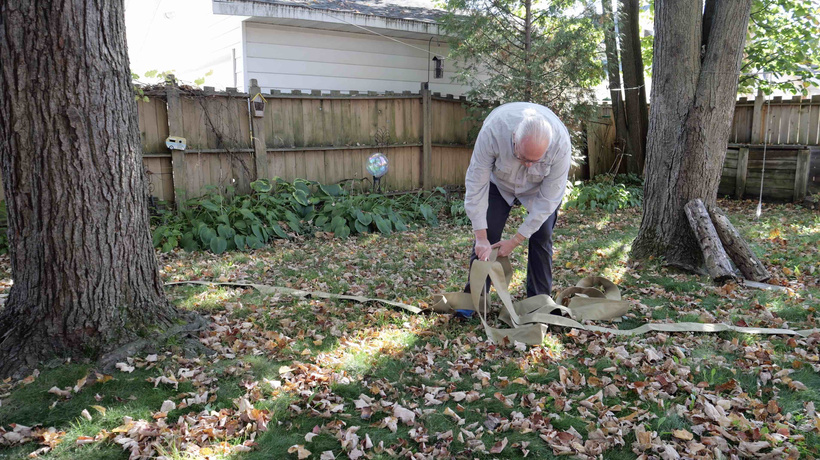
Pro Tip: If you are planning to use a spike, only pound it in with a rubber mallet, or if you are using a hammer, cushion the blows with a piece a wood. This is keep the head of the spike from deforming.
Ground level base
The ground level base is one of the longest and most consistent types of antenna support that I’ve been using. My favorite version is a steel four legged base for a feather or marketing flag. (Those are the flags you commonly see outside of businesses). What I like about the base is that it is conductive, so I can plop it on top of a piece of faraday cloth or connect some wire radials to it for a ground network. The down side of the base is that it is heavy and the center swivels. This in itself isn’t a bad thing, and you can fix the swivel by tightening the bearing that causes the swivel.
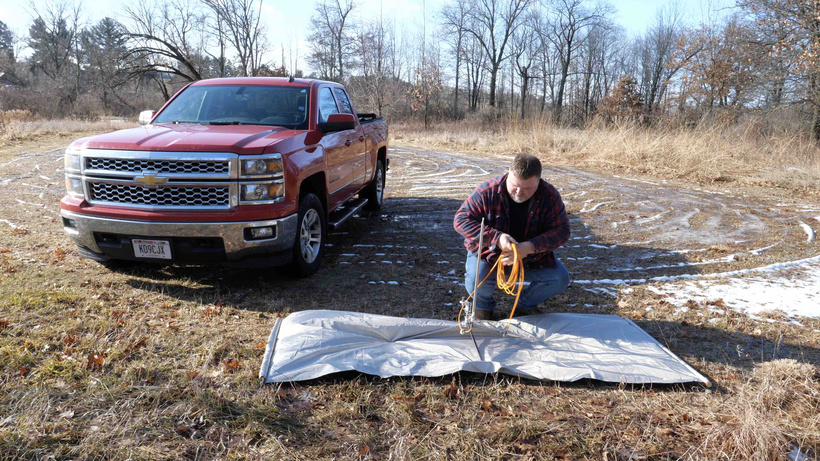
Pro Tip: I’ve had the legs loosen up on my base, keep a set of allen wrenches in your kit to retighten them.
Elevated tripod
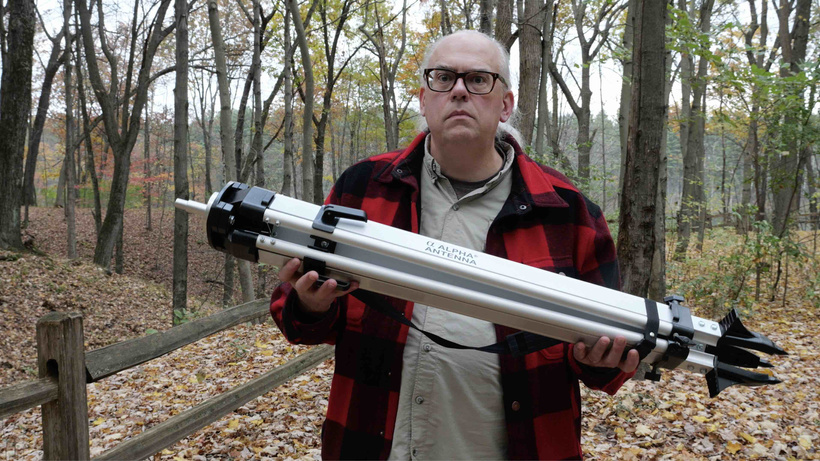
My tripod gets pulled out more and more frequently. I originally pressed it into service to elevate a compact delta loop antenna, and with the increased use of the elevated PERformer and the Challenger antennas, this tripod gets quite the workout. The problem with tripods is that quality ones are expensive. Inexpensive tripods abound, but they are lightweight and cheaply made. If you are looking for a quality tripod, here are a few tips. Avoid carbon fiber. As a material, carbon fiber is strong and lightweight. But unless you are willing to spend well over $100, a carbon fiber tripod won’t be up to the task of supporting an antenna. Stick to aluminum. It is rigid and has a good strength to weight ratio. Second, look for a tripod that offers a removable head. Photographic tripod heads make terrible antenna supports, instead get a quick release plate and mount it to the base of the tripod. Third, look for something that extends to at least 60 inches. Five feet is a good working height for most antennas, you don’t really need to get higher than that.

What about surveyors tripods? The surveyor tripod offers a couple of benefits most photographic tripods can’t. They are rugged and relatively heavy duty. They often have points on their feet you can press into the ground. And the legs can be splayed out for more stability. But they are heavy and bulky and have a 5/8 inch mounting screw, so like photographic tripods, you will have to adapt your setup. If weight and size isn’t an issue, I’d go the surveyor tripod route.
Finishing up
This Thursday is livestream night! Joe and I took the month of October off and I am now ready to go with a another season of livestreams. You can join us on Thursday November 6 at 7:00pm central time. The chat is always lively and we will be ready to answer your ham radio questions. You’ll find the livestream here: https://youtube.com/live/aIC7UnEZGm4?feature=share
I’m making some technology changes to the livestream. First off we are moving to a new platform. We’ve been using Streamyard for years, but for the number of livestreams I do a month, the cost really has become unaffordable. So we are testing out a couple different platforms to gauge their usefulness. Eventually I would like to move to a self hosted option, but I am not quite to that point. I’d love your feedback, tune in on Thursday and let know about the quality of stream. Thanks.
I hope to get you in the log soon,
Michael
KB9VBR

Recent Comments