Connecting an external antenna to an HT

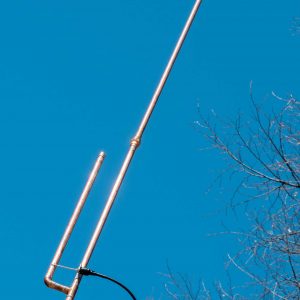
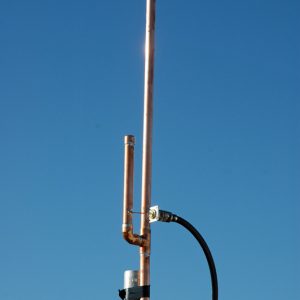
I often receive inquiries if my antennas can be used with handheld or HT radios. The simple answer is that if your radio has a detachable antenna, then yes you can connect it to my J-Pole antennas or another style of antenna.

Connecting your HT to an external antenna is a great way to extend your range of the handheld, especially if you are using your handheld in a remote location. The duck antennas that come with most handheld radios are not very efficient, most have none or even a negative gain. They are designed for portability and not efficiency. If you wanted to set up a field station at a public service event, or even use your HT as a base radio, then you will need a better quality antenna, such as the 2 meter J-Pole antenna.

BNC to PL-259 adapterHandheld radios these days usually have an SMA or a BNC antenna connector on them. The J-Pole antenna uses an SO-239 connector on it, which mates to a PL-259 connector. The PL-259 is the standard connector for 50 ohm coax cable. You will need an adapter to connect your HT to the coax cable. Radio Shack does sell a BNC to SO-239 adapter. The part number is 278-120 and this should be a stocked item for most stores.  I know they also have an SMA to SO-239 adapter, but I was unable to find it in their online catalog. Radio Shack employees are not often well versed in the little components that they carry, so if you have the part number, your shopping experience will go better.

SMA to SO-239 adapterSMA Male to SO-239 JumperMy favorite go to place for adapters and connectors is Tower Electronics. This online retailer can also be found at many hamfests in the the Midwest. When I run into them at a hamfest I’ll often pick up a variety of connectors and adapters that I may need for a future situation. They have both an SMA to So-239 adapter and an SMA to SO-239 adapter with a three foot jumper. For the SMA connector, I recommend getting the adapter with the jumper. This will take the stress off your HT’s connector and prolong it’s life.

If you’ve got a Wouxun handheld radio, please read my new article on how to connect Wouxun radios to an external antenna.

These adapters and connectors will let you connect your handheld radio to standard 50 ohm coax cable so that you can use the J-Pole antenna with your handheld radio. This will not only increase the range of your HT, but also give you solid communications when using your handheld as part of a field station at a public service event. Start collecting adapters and keep them as part of your EMCOMM, emergency communications go-bag kit.


Antennas for MURS: the Multi Use Radio Service

MURS radio kb9vbr j-pole antennasMURS or the Multi Use Radio Service is a license free radio service designated by the FCC for short range business and family communications. MURS has five channels in the 151 – 154 VHF MHz range that can be used. MURS has some distinct features that makes it very useful for a wide variety of communications:

  • No license is needed for MURS communications
  • Voice or data can be transmitted on the MURS frequencies
  • 2 watt transmitter power limit for base and handheld communications, but no limit to antenna gain
  • You can attach external antennas to a MURS radio, like the MURS J-Pole antenna.
  • Antennas must have a max height of 20 feet.
  • There are a wide variety of MURS radios available, like the popular Motorola RDM2020 handheld unit.

The best thing about MURS is that it is license free, so you can hand just about anyone a MURS programmed radio and not worry about the user having a FCC license.

What types of activities or groups are using MURS radios? MURS is great for search and rescue operations, coordinating volunteers at parades and community events, business operations and facilities, and personal communications. The radios are inexpensive and the MURS band is relatively uncongested, so it makes a great choice when other radio services may be loaded with communications.

Since MURS radios can use external antennas, but the antennas are limited to a 20 foot height, you’ll want to select a high performance antenna to maximize your signal range. The MURS J-Pole antenna is a great choice as it is lightweight, affordable, and very sensitive. The antenna’s wide bandwidth covers the entire MURS frequency range and the low noise floor will easily pick out a weak signal from a distant MURS station. Mounted at the 20 foot height, you can ideally expect a 5-10 mile range with your MURS radios, although surrounding buildings and terrain may affect performance.

Need more information about the Multi Use Radio Service to determine if its a right choice for your needs? Check out this MURS resource.


KB9VBR J-Pole Antenna 2011 Christmas Holiday Schedule

KB9VBR J-Pole antennas Christmas TreeMerry Christmas and Happy Holidays! My antennas make great Christmas gifts and I will drop ship them to any US address.  Wouldn’t you love to see a KB9VBR J-Pole Antenna under your Christmas tree? If you want your antenna shipped as a gift to a friend, just leave  me a note during the checkout process of who and where you want the antenna to go. I’ll even include a nice little card wishing the recipient a Happy Holidays.

Christmas day is Sunday, December 25th. The last day to order one of my antennas for guaranteed Christmas delivery is Wednesday, December 21 by 11:59pm central time.

Thanks again for your support, I greatly appreciate your referrals of my antennas to your friends. Have a most excellent Holiday season this year.

Michael, KB9VBR

Unboxing: The Kenwood TM-281A 2 meter transceiver

Kenwood TM-281 2 meter transceiver KB9BVBR j-pole antennaI recently received a Kenwood TM-281A two meter amateur radio transceiver as a door prize at last month’s state ARES/RACES conference. Well, last week I finally got the radio hooked up and put a few frequencies into it. General impressions: this is a very nice rig with clear audio, easy to use functions, and sensitive receive.

I’ve owned quite a few 2 meter and 2/440 rigs over the years from all three of the major manufacturers: Icom, Kenwood, and Yaesu. Each has their peculiarities and differences, but with everyone putting out quality products, it really all boils down to features and capabilities. With that being said, the Kenwood TM-281 delivers and easy to use, quality product. The radio is ruggedly constructed with a large heat sink along the back and bottom. I like the fact that the heat sink isn’t on the top of the rig. My Icom 2100 has a top mounted heat sink and that think filled up with dust and gunk after a couple of years of mobile use. Buttons on the rig are lit and big enough to push while on the road. The radio also has a very nice volume control and channel selector with detent clicks. Pushing the channel knob also access the setup menus.

Setting it up in my basement shack, I had it connected, programmed with one frequency and on the air in less than 10 minutes. The instructions are well laid out and the index quickly brought me to the section on where to program memories. But you can just as easy us it in the VFO mode as it has automatic repeater offset shift and enabling tone control was straightforward. The only thing I found a little cumbersome was using the direct entry keypad on the microphone, but it seems like this is a downfall on all the radios these days.

Kenwood Tm-281 TM-V7a j-pole antenna kb9vbr reviewAudio on the Kenwood TM-281 is excellent, although compared to the audio on my primary base rig, the Kenwood TM-V7A, it seems a little tinny. The TM-V7a has a larger, top mounted speaker that give a fuller, richer sound. The TM-281′s speaker is smaller and front mounted, which is an advantage when the radio is mounted in a vehicle. Since I didn’t mount it in my car, I don’t know how the smaller speaker fares when up against the vehicle noise while on the road.

Out of the box, the Kenwood Tm-281 puts out 65 watts of power on high and 25 watts on low. This is great for mobile use as we usually run our mobiles on high power anyways. I’d love to see a more energy conserving 10 watt mode for low power base station use. I hooked the radio up to my 2 meter J-Pole antenna that I use for my secondary VHF and digital station. This antenna is mounted on a mast at about 10 feet. I had no problem picking out other mobile signals within at 10 mile radius on the repeater’s reverse frequency. The radio also has a built in weather alert function, and I scanned the weather band, picking up about 4 transmitters in a 60 mile radius. This rig definitely has a very sensitive receive. It also wasn’t bothered by my other rig while transmitting on a second 2 meter frequency.

The radio has up to 200 memories, but if you use the 6 character alpha tags for your memories, you will be limited to only 100 memory channels. 100 memory channels seems a little small for a radio in this day and age, especially if you travel a lot. My first 2 meter rig, an Icom 2100a, offered that many channels 10 years ago and I had it filled pretty quick.

All in all, I’m impressed with the Kenwood TM-281. It’s a highly capable, affordable amateur radio rig, and would recommend it to anyone looking for a starter radio or second rig for the shack or vehicle. I have  a feeling this one will eventually wind up in the wife’s car.


Holiday Lights Spectacular: providing music for your Christmas displays

Holiday Light Spectacular Low Power FM broadcast antennaIt’s hard to believe that the Christmas holiday season is right around the corner. But the intrepid people that put together holiday lights displays for their homes have already been busy for months designing the concept and pulling together the lights and effects to turn their house into a winter wonderland.

Many lights displays now contain synchronized music and more and more lighting designers are turning to the Low Power FM Broadcast J-Pole antenna to help transmit the sound to the car radios of the viewers. The LPFM J-Pole antenna works great in this regard as it’s half wave design and low noise floor will give you a strong without flutter or dropouts even with the lowest power transmitters. Since the FM transmitters preferred by the Holiday Lights crowd tend run around 5 watts, a good antenna is key for a stronger, better signal.

Many popular transmitters, like the Ramsey FM-30B require an ‘F’ connector for their antenna port. All my antennas come with an SO-239 connector that is a standard for VHF and UHF antennas. I recommend an F to SO-239 adapter so that you can use off the shelf coax with standard connectors.

November is a busy month for antennas, but turnaround for the LPFM antenna is usually only 3 days, and I ship via USPS Priority Mail, so you can have your antenna in under a week. Order before Thanksgiving and you should be on the air around the 1st of December.


2011 Wisconsin State ARES/RACES Leadership Conference

Wisconsin ARES RACES conference amateur radio emcomm

Kathy Schramm, KB9UAZ opens this year's ARES/RACES conference

I had the privilege of once again attending the annual Wisconsin State ARES/RACES Conference. I can’t believe that this annual event has been going on for 13 years now, and of those 13 years, I’ve only missed two conferences, the first one, held in 1999 and again in 2004.  Being licensed since 1999, I’ve been an active participant in emergency communications and really look forward to these conferences as a place to learn and network.

The theme of this year’s conference was “Mutual Aid, being there for each other.” We often think of mutual aid as providing coverage for our neighboring county if they have a communications event or incident and need more operators. But we should also think of our providing support for our served agencies as a form of mutual aid. They are looking for communications resources, and as ARES/RACES operators, we have the unique skill of providing support for when the served agency’s systems may be overwhelmed.

I think the best presentation of the conference came towards the end of the day when Dan Lenz, KB9IME gave a report on what was observed at this year’s Simulated Emergency Test (SET).  In Wisconsin, this year’s scenario was to test the efficiency of local and district nets in funneling information to the State’s HF net. For the most part, limitations and deficiencies were found, but as the Wisconsin Emergency Mangement hamshack operator observed; a lack of traffic making its way to the state hamshack didn’t necessarily mean there was a failure in the system, but instead local nets where funneling information to the districts and district nets where handling traffic properly.

Lenz’s comments on why we train are telling of his attitudes towards training in the State. We need to drill and train in the field, so we are comfortable with field operations. Checking in from home won’t improve our communication abilities when we are called to provide emergency communications in the event of a disaster or other incident.

Finally, according to Lenz in approaching the reason we drill: SETS and drills are not contests, they are not supposed to be ‘successful’. If you found that your plan didn’t work, that is a success. if everything goes right, it’s time to worry.

I can’t wait for next year’s conference.